
 Facebook
 Twitter
How UK Players Are Using Crypto for Online Gambling in 2026: A Complete Guide to USDT Casino Platforms, Benefits, and Responsible Play
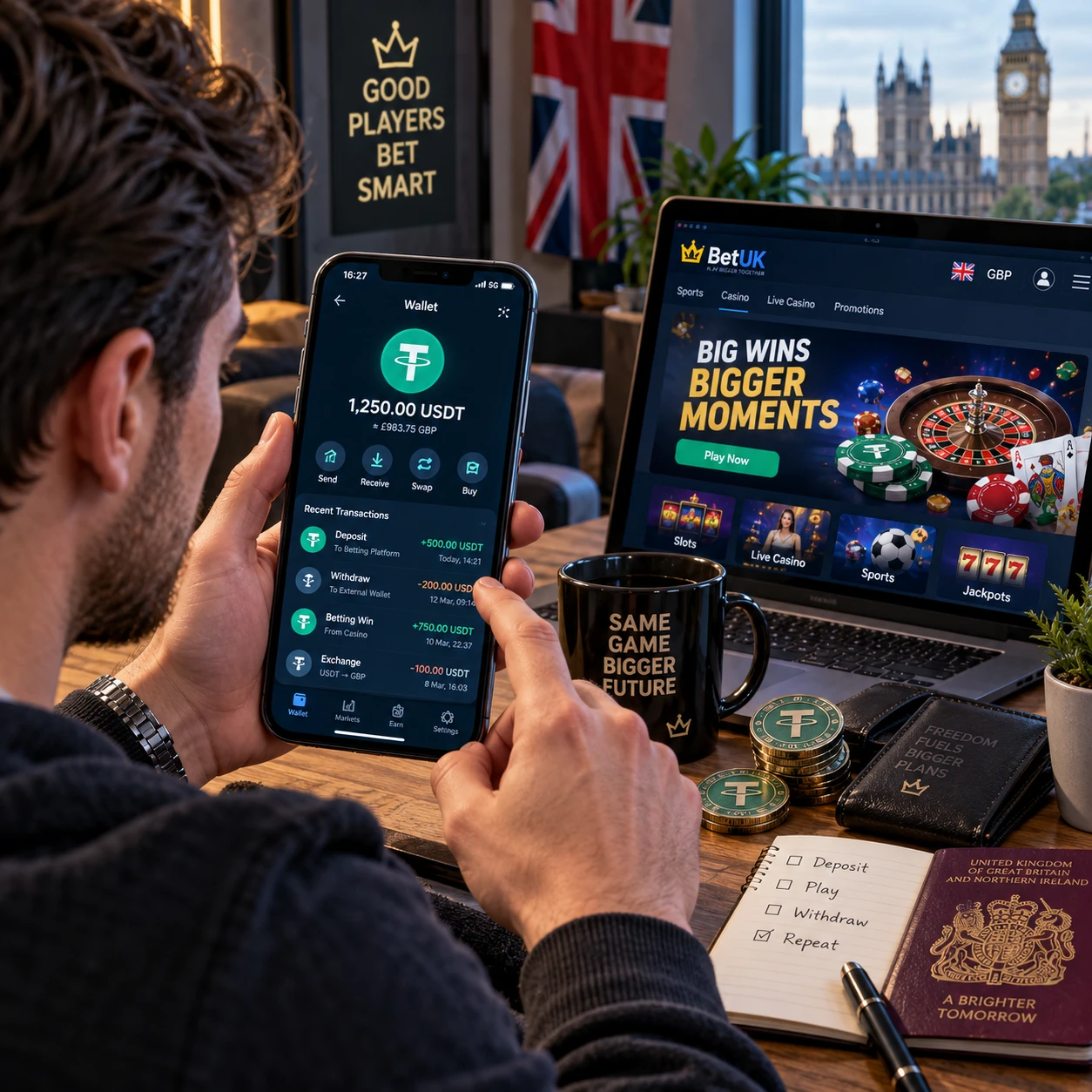
The Rise of Crypto Gambling Among UK Players in 2026
I've watched online gambling in the UK shift pretty dramatically over the past couple of years, and 2026 feels like the moment it tipped. Crypto isn't some fringe curiosity anymore — it's become a go-to payment method for a growing chunk of players I talk to. Traditional banking still gets used, sure, but it's increasingly getting pushed aside by stablecoins like USDT (Tether). This isn't random. It's a direct response to problems I've personally run into with my own bank when trying to fund gambling accounts.
A few things are driving this. Banks have gotten stricter — sometimes brutally so — about gambling-related transactions. I've had payments flagged or declined outright, no warning, just a frozen card at the worst possible moment. Add to that the usual withdrawal delays (three to five business days is standard, and that's if nothing goes wrong), and you start to see why players are looking elsewhere. Crypto skips the middleman entirely. No bank sitting between you and your own money, deciding when you're allowed to use it.
But the appeal goes beyond just speed. Privacy matters too — crypto transactions give you a layer of anonymity that traditional banking just doesn't offer. Reputable platforms still verify your identity (that part isn't going away, thanks to anti-money laundering rules), but the actual movement of funds happens on blockchain networks, not through your bank's internal systems. For UK players who want something faster, more flexible, and less restrictive, crypto has quietly become the obvious answer in 2026.
What Is USDT and Why It Matters for Online Gambling
USDT — most people just call it Tether — is a stablecoin. Basically, it's cryptocurrency designed to hold a steady value by pegging itself to the US dollar. Unlike Bitcoin or Ethereum, which can swing wildly within an hour (I've seen it happen in minutes, honestly), USDT is built to sit around $1.00 per token. That stability comes from reserve backing: the company issuing it holds assets matching the number of tokens out there.
For gambling specifically, this stability is kind of a big deal. Picture depositing the equivalent of £500 in Bitcoin, then checking your balance an hour later and finding it's dropped to £450 because the market moved. Or jumped to £550 — either way, that's unpredictability you didn't sign up for, layered on top of the gambling risk you did sign up for. USDT just... removes that problem. What you deposit is what you've got to play with.
And it matters on the way out too. If you win and request a payout in a volatile coin, the value could tank before you've even converted it back to pounds. With USDT, you know the number stays put through the transfer and the conversion. That predictability is exactly why USDT has become the preferred crypto for gambling transactions — even among players who hold Bitcoin or Ethereum as actual investments.
USDT vs. Other Cryptocurrencies for Betting
Bitcoin and Ethereum still get used plenty for crypto gambling, but USDT has some real advantages that make it a better fit for betting specifically. Bitcoin suffers from that notorious volatility, plus fees that spike hard when the network's congested. A deposit that costs £2 in fees on a quiet day might cost £15 or more during a busy stretch. Confirmation times aren't consistent either — sometimes over an hour during peak usage, which is painful when you just want to place a bet.
Ethereum fixes some of Bitcoin's speed issues (faster block times, quicker confirmations), but it's still volatile, and fees were a genuine headache before the recent network upgrades. For gambling, where you want to deposit and start playing without fuss, these are complications nobody needs.
USDT, on the other hand, runs on multiple blockchain networks — Ethereum, Tron, others — so you can pick whichever option has the lowest fees and fastest processing. Tron-based USDT transfers typically land within minutes and cost less than £1 in fees. That combo of stable price, low cost, and quick processing is what makes USDT the practical choice for regular gambling transactions. Bitcoin and Ethereum still make sense for long-term holding or big, infrequent transfers where you're willing to ride out the volatility — just not for day-to-day betting.
How USDT Casino Platforms Work
USDT casino platforms don't really change the gambling experience itself — the games, odds, and interfaces stay pretty much the same. What's different is the payment infrastructure underneath it all. Instead of linking a debit card or bank account, you're using a crypto wallet, a digital app that stores and manages your crypto assets.
It starts with getting a compatible wallet. You've got software wallets for your phone or computer, or hardware wallets that keep your credentials offline for extra security. Once that's set up, you need to actually buy USDT — usually through an exchange where you convert pounds sterling into the stablecoin. Plenty of UK exchanges now make this straightforward, with bank transfers and even debit card purchases built right in.
After you've got USDT, linking your wallet to a casino is simpler than it sounds. You copy a deposit address — just a string of letters and numbers — from the casino and paste it into your wallet's send function. The transaction gets broadcast to the blockchain, confirmed, and credited to your account. For UK players looking to explore a dedicated usdt casino, understanding these mechanics genuinely helps — it makes transactions smoother and platform selection a lot less confusing.
Withdrawals work the same way, just reversed. You request a withdrawal, give your wallet address, and the casino sends USDT straight there. Speeds vary by network, but most USDT transfers finish within 10 to 30 minutes. Compare that to the multi-day wait for a bank transfer — it's not even close. That speed, plus the privacy that comes with blockchain transactions, is a real operational upgrade for a lot of UK players.
Step-by-Step Guide to Depositing USDT
Step 1: Set Up a Cryptocurrency Wallet
Download a reputable wallet app — Trust Wallet, MetaMask, Exodus, whatever suits you. During setup, you'll get a recovery phrase, usually 12 or 24 words. Write it down, store it offline, and never — I mean never — share it with anyone. That phrase is the keys to your funds.
Step 2: Purchase USDT
Create an account with a UK-friendly exchange like Coinbase, Binance, or Kraken. You'll need to go through identity verification, which usually means a photo ID and proof of address. Once that's sorted, deposit pounds sterling via bank transfer or debit card, then use the trading interface to buy USDT. For your first go, start small — just to get comfortable with the process.
Step 3: Transfer USDT to Your Personal Wallet
In your exchange account, head to withdrawal and select USDT. You'll need to pick a blockchain network — Tron (TRC-20) is the one I'd recommend for low fees and fast transfers. Copy your wallet's receiving address (under 'Receive' or similar in your wallet app), paste it into the exchange's withdrawal form, enter the amount, confirm. It should land in your wallet within minutes.
Step 4: Deposit to Your Casino Account
Log into your casino, head to deposits, select USDT, and choose the right blockchain network — make sure it matches whatever network your USDT is actually on. The casino shows you a deposit address. Copy it, open your wallet, hit 'Send,' paste the address, enter your amount, confirm. Your balance should update within 10-30 minutes once the blockchain confirms things.
Step 5: Verify Your Deposit
Most platforms give you a transaction history or pending deposits section so you can track the transfer. If nothing shows up within an hour, double-check you sent to the right address on the right network — that's the most common mistake. Transaction IDs from your wallet can also help you track things on a blockchain explorer if needed.
Key Benefits of Using USDT for UK Online Gambling
The benefits of USDT for gambling go well past novelty or tech enthusiasm. For UK players in 2026, these are real fixes for real frustrations with traditional payment methods — not experimental extras, but practical improvements.
Withdrawal speed is probably the most noticeable one. Traditional casinos processing payouts via bank transfer typically need three to five business days, sometimes longer around bank holidays or if extra verification gets requested. USDT withdrawals usually wrap up within 30 minutes to an hour. That means your winnings are accessible almost immediately — faster access, more flexibility in managing your bankroll.
Fees are another big one. UK banks often charge for gambling-related transactions, and some have started blocking them outright as part of safer gambling initiatives — well-intentioned, maybe, but frustrating if you gamble responsibly and just want control over your own money. USDT bypasses traditional banking infrastructure entirely, with fees typically under £1 regardless of transaction size. That's especially useful for smaller deposits and withdrawals, where percentage-based fees would otherwise eat into your balance.
Privacy is something a lot of players genuinely value. Reputable USDT casinos still require identity verification — that's not optional, and it shouldn't be — but the actual financial transactions happen on blockchain networks rather than passing through banks that might monitor, restrict, or report gambling activity. If you'd rather keep your gambling separate from your main banking relationship, this gives you a real degree of financial autonomy.
Plus, a lot of USDT casinos offer better bonuses and promos for crypto users — deposit match bonuses, cashback programs, reduced wagering requirements. These incentives reflect the lower processing costs these platforms deal with when handling crypto versus traditional payment processors. For players willing to adopt crypto, that translates into real value.
Choosing a Safe and Reputable USDT Casino Platform
Crypto gambling's growing popularity has, unfortunately, attracted both legit operators and some less scrupulous ones hoping to cash in on the relative novelty of crypto payments. For UK players in 2026, picking a trustworthy USDT casino means actually evaluating a few critical factors — the stuff that separates professional, regulated operations from potential scam sites.
Licensing comes first, every time. Reputable platforms hold licenses from recognized authorities — the UK Gambling Commission, the Malta Gaming Authority, Curaçao eGaming. These licenses mean the platform's been held to standards around fair play, financial security, and responsible gambling. Some crypto casinos skip traditional licensing entirely, claiming crypto's decentralized nature puts them outside normal regulatory frameworks. I'd treat that claim with real skepticism — platforms like that offer very limited recourse if something goes wrong.
Security measures deserve close attention too. Look for SSL encryption, two-factor authentication, provably fair gaming systems that let you actually verify game outcomes aren't rigged. Transparency about cold storage for player funds and segregated accounts says a lot about whether a platform takes protecting your assets seriously. Reviews from other UK players are genuinely useful here — they'll tell you about reliability, withdrawal speeds, and how responsive support actually is.
Terms and conditions get skipped over far too often, but that's where the real information lives — wagering requirements, withdrawal limits, account restrictions. Reputable platforms lay these out clearly. Problematic sites bury the bad stuff in dense legal language, hoping you won't notice until it's too late. Pay close attention to withdrawal policies, maximum cashout limits, and anything specifically restricting UK players. For UK players looking to explore a dedicated usdt casino, it's worth comparing game variety, bonus structures, support availability, and interface quality before committing any funds.
Customer support quality tells you a lot about legitimacy. Professional operations offer multiple contact methods — live chat, email, sometimes phone — with reasonable response times. I'd test support before depositing anything significant: ask about licensing, withdrawal procedures, technical requirements. How a platform answers (or doesn't) reveals a surprising amount.
Red Flags to Watch For
Some warning signs should make you walk away entirely, no matter how good the bonuses look. Unclear or missing licensing information is at the top of that list. If a casino can't or won't give you specific license details — number, issuing authority — don't trust it.
Unrealistic bonus offers are another red flag I've learned to spot quickly. Crypto casinos can be generous, sure, but promises of 500% deposit matches or guaranteed winnings usually mean impossible wagering requirements lurking in the fine print, or an outright scam. Same goes for platforms with no KYC verification at all — that might sound appealing for privacy reasons, but its absence usually means the operator's either willing to facilitate money laundering or has no real intention of ever processing your withdrawal.
User reviews complaining about withheld withdrawals, suddenly changed terms, or unresponsive support deserve real consideration. Every platform gets the occasional complaint — that's normal. But a pattern of similar issues across multiple review sites and forums? That's not noise, that's a signal. And brand-new platforms with no track record and barely any online presence carry inherent risk too — not necessarily illegitimate, but definitely unproven.
Watch for pressure tactics too: limited-time offers demanding immediate deposits, account managers pushing hard for bigger deposits, difficulty finding clear withdrawal information. Legitimate platforms let you take your time and make informed decisions — no artificial urgency, no unclear terms hiding in the shadows.
Responsible Gambling with Crypto in the UK
The convenience and speed that make USDT so appealing also create risks UK players need to actually manage, consciously. The near-instant nature of crypto deposits removes that natural cooling-off period you get when bank transfers take a few days to clear. That immediacy makes impulsive decisions a lot easier to act on — and that can lead to behavior you'll regret later.
Setting personal limits before you even start gambling is a fundamental responsible gambling practice, and it matters even more in the crypto context. Figure out, in advance, how much you can actually afford to lose without touching essential expenses, savings goals, or financial obligations. That budget should guide everything — and the temptation to blow past it during a losing streak needs to be actively resisted, every single time. Plenty of USDT casinos now offer deposit limit tools letting you cap spending over daily, weekly, or monthly periods. Use them. They're a structural safeguard against your own impulses.
Time limits matter too. There's no physical travel to a venue, no closing time — platforms run 24/7, and that blurs the line between gambling and everything else in your life. Setting specific time allocations for gambling, and actually sticking to them, helps keep things balanced. Alarm reminders or app-based time tracking can support those self-imposed boundaries when willpower alone isn't enough.
Self-exclusion programs are less developed in crypto casinos than in traditional UK-licensed gambling, but they're starting to appear on more reputable platforms. These let you voluntarily ban yourself from your own account for defined periods — weeks, months, or permanently. If you're finding it hard to control your gambling, use these tools. Seriously consider registering with GAMSTOP too, the UK's national self-exclusion scheme, which covers a lot of licensed operators.
The UK Gambling Commission is still adapting its guidance to fully cover crypto gambling, but it maintains clear expectations around responsible gambling regardless of payment method. Operators need to provide easy access to responsible gambling tools, display risk information clearly, and make support resources available. UK players should expect that from any platform — and treat its absence as a serious warning sign about an operator's priorities.
Legal and Regulatory Outlook for Crypto Gambling in the UK
The legal status of crypto gambling in the UK in 2026 sits in a genuinely complicated middle ground. Gambling itself is heavily regulated under the Gambling Act 2005, overseen by the UK Gambling Commission, which requires operators serving UK customers to hold a license. But the overlap between crypto technology and gambling regulation has created some real gray areas that both operators and players need to navigate carefully.
For operators, the principle stays clear: any platform offering gambling services to UK residents needs a UK Gambling Commission license, whether it accepts crypto or traditional currency. That requirement ensures consumer protections — fair gaming standards, responsible gambling measures, secure handling of player funds. But some crypto casinos operate from offshore jurisdictions and accept UK players without UK-specific licensing, instead holding licenses from places like Curaçao or Malta. It's not explicitly illegal for UK players to use these platforms, but they operate in a gray area that offers noticeably fewer protections.
From a player's side, using crypto for gambling isn't illegal in the UK. British law doesn't stop you from holding, buying, or spending crypto — including for gambling. That said, if you're using offshore platforms without UK licensing, understand you're operating with reduced consumer protections. Disputes can't be escalated to the UK Gambling Commission, and getting your funds back if something goes wrong becomes a lot harder.
Taxation is worth addressing too. Good news: gambling winnings in the UK aren't subject to income tax or capital gains tax, regardless of whether you win in pounds sterling or crypto — that's a longstanding policy. But if you convert USDT into other cryptocurrencies and those holdings appreciate, selling them later could trigger capital gains tax obligations. Keeping records of your crypto acquisitions, conversions, and disposals helps you stay compliant with HMRC requirements.
Looking ahead, regulatory developments in 2026 suggest increasing scrutiny of crypto gambling. The UK Gambling Commission has already issued guidance confirming existing regulations apply to crypto gambling, and operators can't use crypto's technical characteristics to dodge licensing requirements or consumer protection standards. There are ongoing discussions about updating the regulatory framework for crypto-specific issues — blockchain transparency for proving fair play, how player funds in digital wallets get handled. UK players should stay on top of these developments; they could affect platform availability and how operators run things going forward.
Conclusion
Crypto, particularly USDT, has become genuinely woven into how UK players engage with online gambling platforms in 2026. Faster transactions, lower fees, better privacy, and often stronger bonuses — that combination has made crypto an increasingly popular alternative to traditional banking and the restrictions it sometimes brings.
But this convenience has to be balanced with informed decisions and responsible gambling habits. The speed and ease of crypto transactions are real advantages, but they also remove natural barriers that might otherwise encourage more considered gambling behavior. If you're adopting USDT for gambling, prioritize platform selection carefully — favor licensed, transparent operators with proven track records over flashy, unverified newcomers. Understanding how crypto transactions actually work, keeping your wallet and recovery phrase secure, and setting personal gambling limits all add up to a safer, more sustainable approach.
The regulatory landscape keeps evolving, with UK authorities working to make sure consumer protections keep pace with the technology. Players who stay informed, who demand the same standards from crypto casinos they'd expect from traditional operators, and who stick to disciplined, responsible gambling habits will be in the best position to enjoy what this technology offers — while sidestepping its real pitfalls. As crypto becomes more mainstream through 2026, its role in online gambling isn't shrinking anytime soon. Education, platform scrutiny, and personal responsibility matter more than ever for UK players navigating this space.